
5 Awesome Elasticsearch Alternatives
 Yulei Chen
Elasticsearch is the most popular open-source search and analytics engine. It powers full-text search, log analytics, real-time data exploration, and observability for thousands of companies worldwide. Elastic Cloud pricing starts at around $95/month for a basic production setup, and costs scale quickly with data volume - modest production deployments typically land between $200 and $8,000/month.
If you want to skip the cloud bill entirely, you can self-host Elasticsearch on Sliplane for just €9/month with one-click deployment, persistent storage, and zero server management.
But Elasticsearch isn't always the right fit. Maybe you need something simpler for instant app search, a lighter engine for log analytics, or a drop-in fork without the licensing concerns. Here are 5 awesome alternatives worth considering.
1. OpenSearch
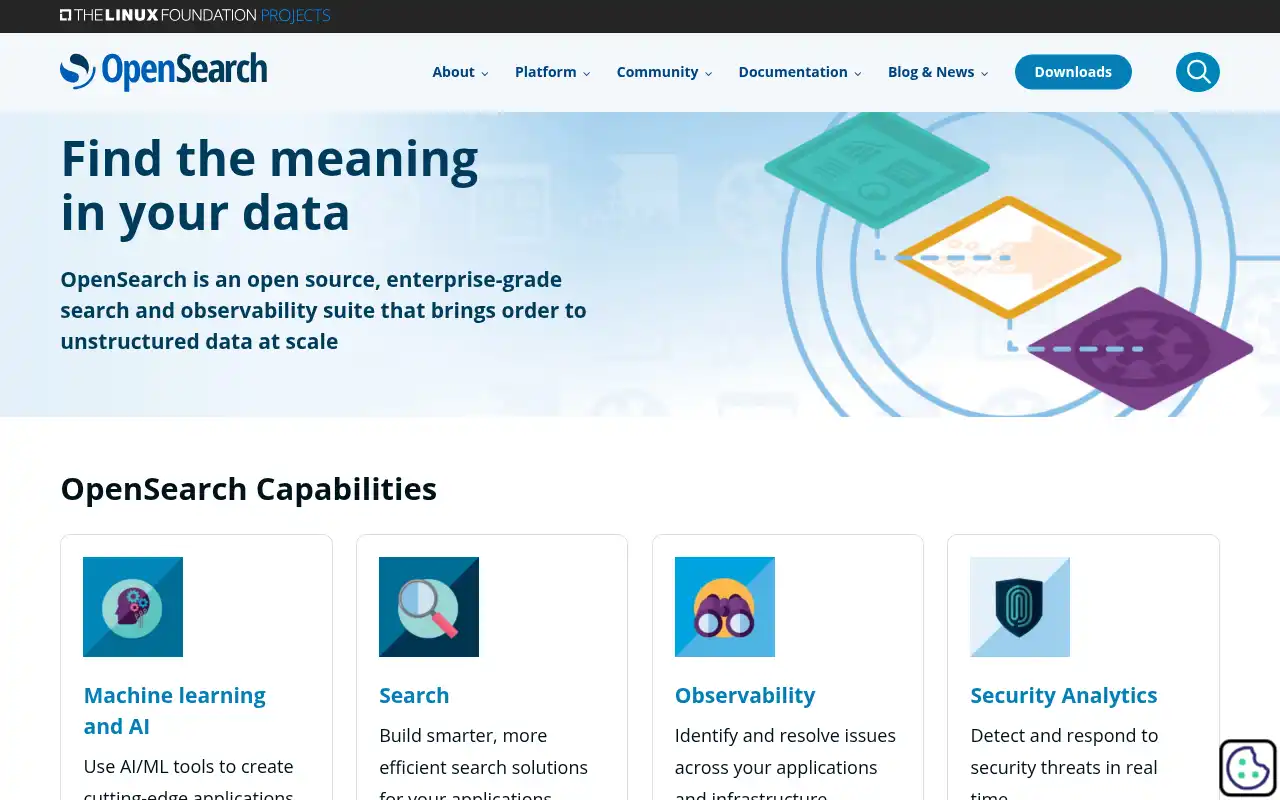
OpenSearch is a community-driven, open-source search and analytics suite forked from Elasticsearch 7.10.2 under the Apache 2.0 license. It's API-compatible with Elasticsearch, which means migrating existing applications is straightforward - most clients and integrations work with minimal changes.
- Features: Full-text search, vector search, analytics, dashboards (OpenSearch Dashboards, a Kibana fork), anomaly detection, alerting, SQL and PPL query languages, security plugin with fine-grained access control, and cross-cluster replication.
- Why You Should Use It: If you're already running Elasticsearch and want to stay on a truly open-source license, OpenSearch is the lowest-friction migration path. It matches Elasticsearch's feature set closely, has strong community momentum with regular releases, and is backed by AWS and a growing contributor base.
- Why Not: OpenSearch trails Elasticsearch in newer features like ESQL and some advanced machine learning capabilities. The ecosystem of third-party plugins and integrations is smaller. If you're starting fresh and don't need Elasticsearch compatibility, a purpose-built tool might serve you better.
- Pricing: Fully free and open-source to self-host. Amazon OpenSearch Service (managed) starts at ~$26/month for a t3.small instance. Third-party managed providers like Aiven start at ~$19/month. Self-hosting on Sliplane costs just €9/month.
2. Meilisearch
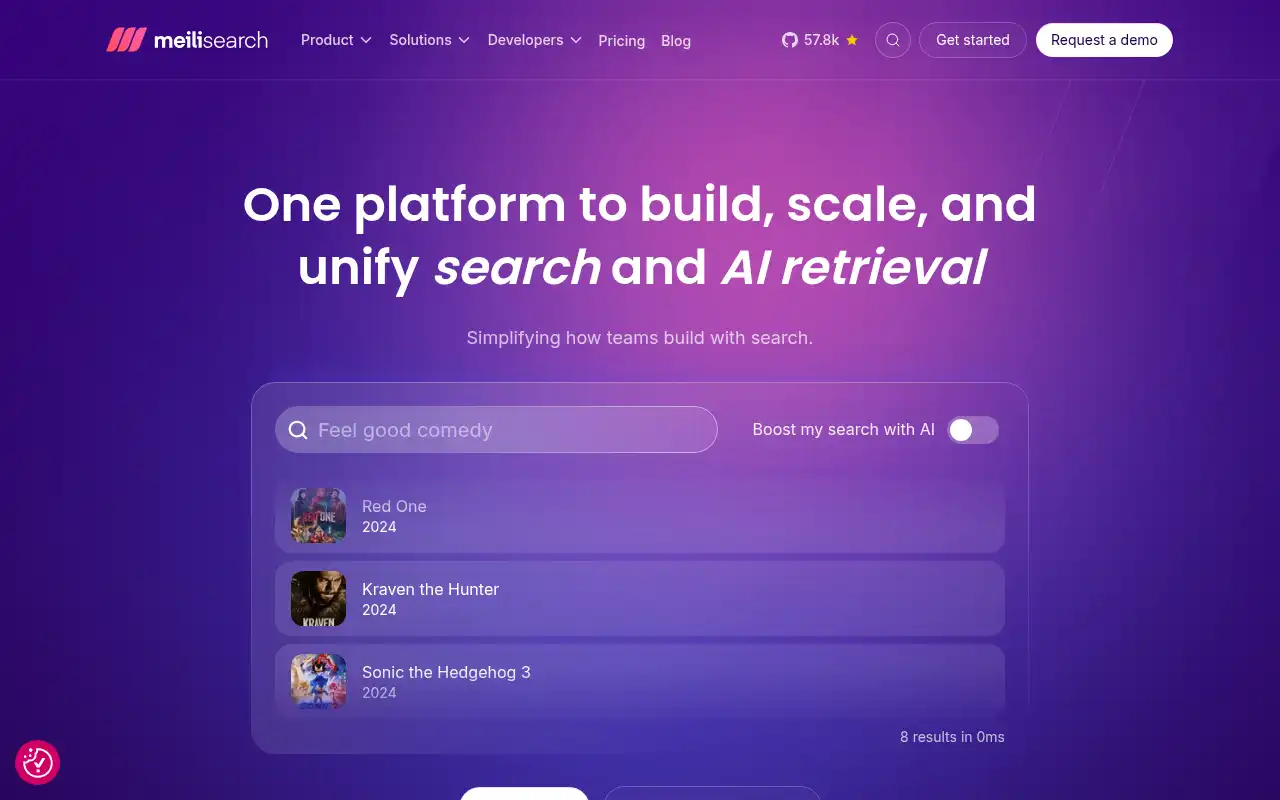
Meilisearch is an open-source search engine written in Rust, designed for instant search experiences. It returns results in roughly 50ms on typical workloads, includes typo tolerance and faceting out of the box, and has a simple REST API that developers can integrate quickly.
- Features: Instant search with typo tolerance, faceted search, geo search, multi-tenancy, AI-powered hybrid search (full-text + vector embeddings), synonyms, stop words, customizable ranking rules, RESTful API, and SDKs for most languages.
- Why You Should Use It: If you're building app search for a website, e-commerce store, or documentation site, Meilisearch is hard to beat. It's designed to be developer-friendly with minimal configuration - you can have a working search experience in minutes. The hybrid search feature combines keyword and semantic search in one query, which is great for AI-powered applications.
- Why Not: Meilisearch is optimized for small-to-mid-size datasets (think millions of documents, not billions). It doesn't support distributed clustering for horizontal scaling. For log analytics, observability, or large-scale data processing, Elasticsearch or OpenSearch are better choices.
- Pricing: Free and open-source (MIT license) to self-host. Meilisearch Cloud starts at $30/month (Build plan, 50K searches/month). Pro plan at $300/month. Self-hosting on Sliplane costs just €9/month.
3. Typesense
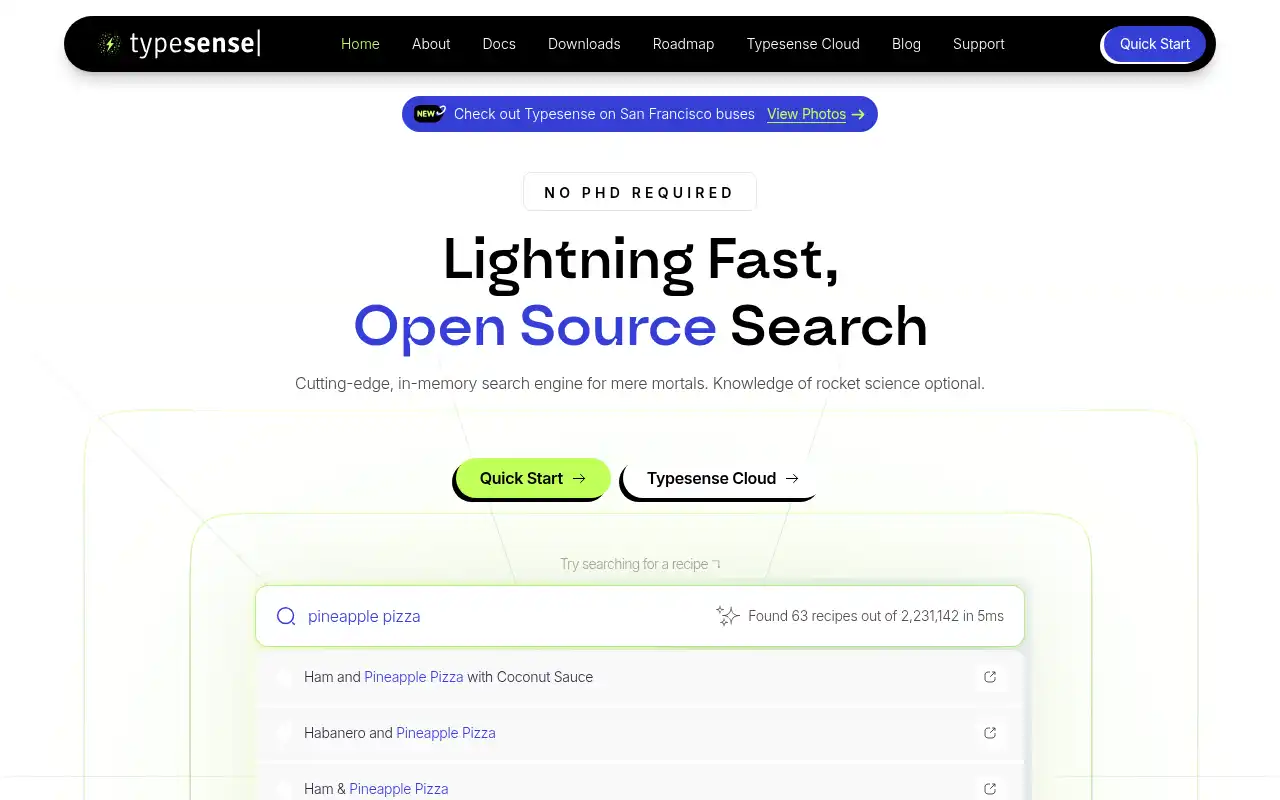
Typesense is an open-source, typo-tolerant search engine built for speed and simplicity. It keeps indexes in RAM for maximum performance and charges based on infrastructure, not per search request, so traffic spikes don't generate surprise bills.
- Features: Typo tolerance, faceted search, geo search, vector search, dynamic sorting, synonyms, curations (pinning/hiding results), multi-tenant API keys, search analytics, federated search across multiple collections, and high-availability clustering with Raft consensus.
- Why You Should Use It: If you want a search engine that's fast to set up and doesn't nickel-and-dime you per query, Typesense is a great pick. Its built-in clustering support means you can run a highly available setup without a separate coordination service. The developer experience is excellent, with clear documentation and SDKs for most languages.
- Why Not: Like Meilisearch, Typesense is optimized for application search on structured datasets. It's not designed for log analytics, time-series data, or the complex aggregation queries that Elasticsearch handles well. The community is smaller, which means fewer plugins and integrations.
- Pricing: Free and open-source (GPL-3.0) to self-host. Typesense Cloud starts at ~$40/month for managed instances with scaling, backups, and support. No per-query charges. Self-hosting on Sliplane costs just €9/month.
4. Manticore Search
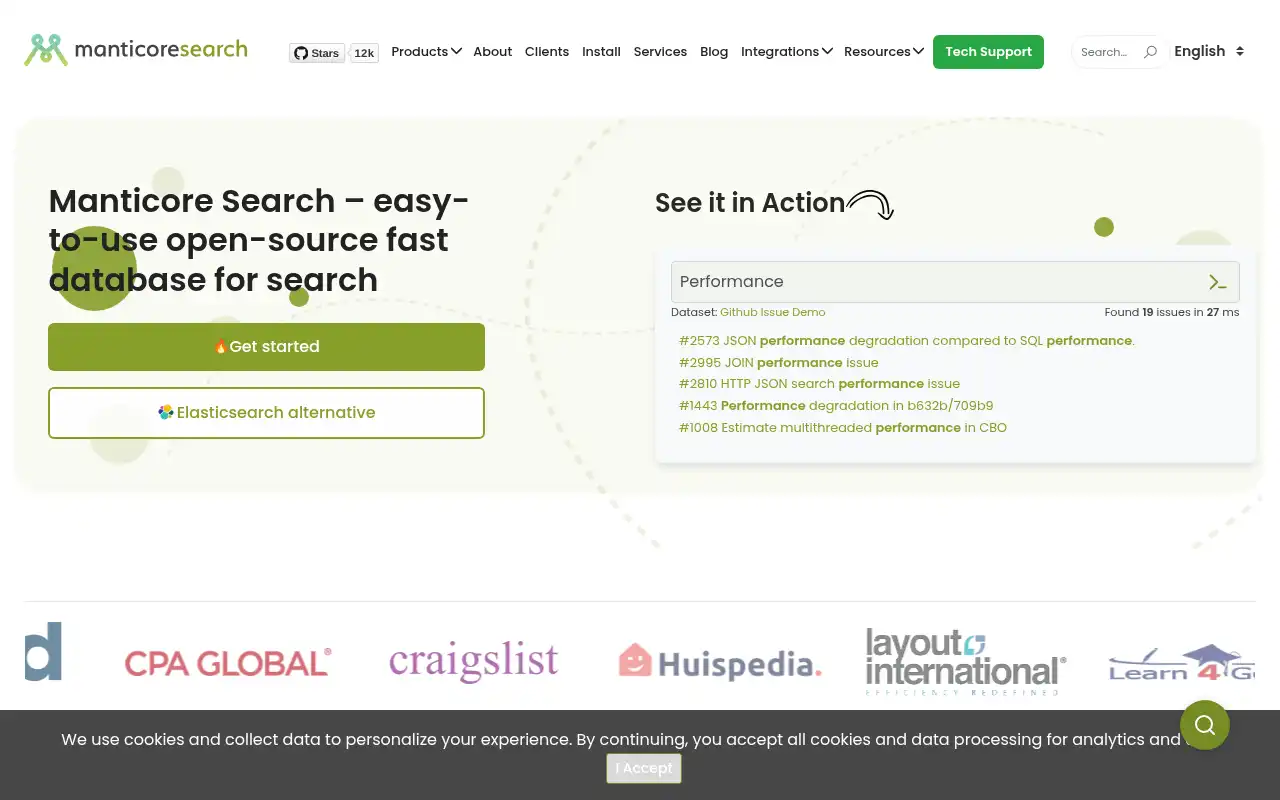
Manticore Search is an open-source search engine that delivers significantly faster performance than Elasticsearch for full-text search workloads. It offers both SQL and HTTP interfaces, making it accessible to developers and DBAs alike.
- Features: Full-text search with built-in tokenizers and morphology, real-time indexes, SQL-compatible query language, HTTP JSON API, vector search, distributed searching across shards, columnar storage for analytics, percolate queries (reverse search), data replication, and efficient resource usage on small hardware.
- Why You Should Use It: If raw full-text search performance is your priority, Manticore is worth a serious look. Benchmarks show it outperforming Elasticsearch by 2-10x depending on the workload. It runs efficiently on minimal hardware (1 core, 1 GB RAM), which keeps self-hosting costs low. The SQL interface is a big plus if your team is more comfortable with SQL than Elasticsearch's query DSL.
- Why Not: Manticore's ecosystem is much smaller than Elasticsearch's. There's no equivalent to Kibana for visualization and dashboards. The documentation, while improving, isn't as comprehensive. If you rely on the ELK stack (Elasticsearch, Logstash, Kibana) for observability, switching to Manticore means rebuilding that pipeline.
- Pricing: Fully free and open-source (GPL-3.0). No official managed cloud service. Third-party managed hosting via Elestio starts at ~$11/month. Self-hosting on Sliplane costs just €9/month.
5. Apache Solr
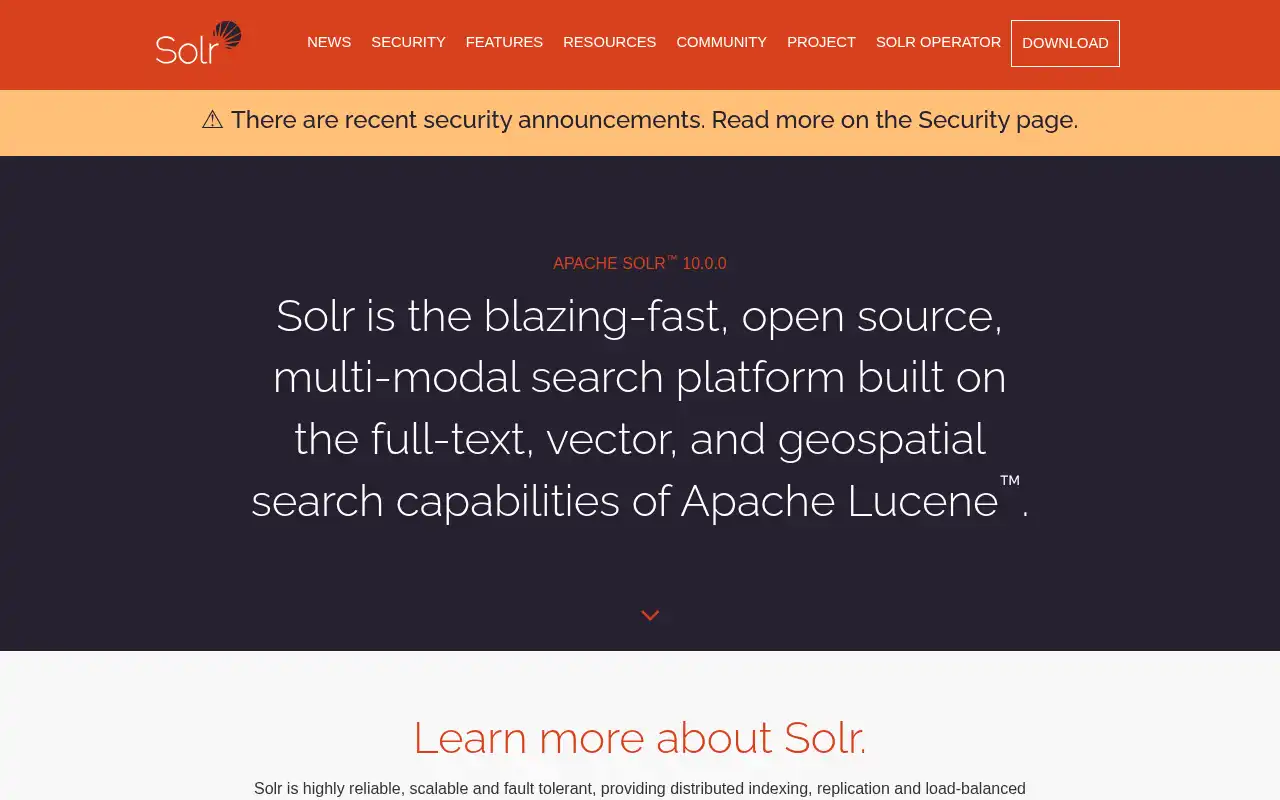
Apache Solr is the original Lucene-based search server, first released in 2006. It powers search for some of the largest websites in the world and remains a solid choice for enterprise content management, e-commerce, and library systems.
- Features: Full-text search with rich text analysis, faceted search and navigation, distributed search via SolrCloud with ZooKeeper, near-real-time indexing, configurable request handlers, extensive plugin architecture, schema API, streaming expressions for parallel computation, and mature security with authentication and authorization.
- Why You Should Use It: If you're in a Java-heavy environment or working with enterprise content management systems, Solr is battle-tested and reliable. SolrCloud provides production-grade distributed search with automatic failover. The plugin ecosystem is mature, and there's two decades of community knowledge, tutorials, and Stack Overflow answers to draw from.
- Why Not: Solr has a steeper learning curve than modern alternatives and requires ZooKeeper for distributed mode, adding operational complexity. The development pace has slowed compared to Elasticsearch and newer search engines. For greenfield projects in 2026, a more modern engine like Meilisearch or Typesense is usually a better fit unless you have specific needs that Solr excels at.
- Pricing: Fully free and open-source (Apache 2.0). Managed hosting via OpenSolr starts at €12/month. SearchStax managed Solr starts at $367/month for production use. Self-hosting on Sliplane costs just €9/month.
Conclusion
| Tool | Best For | Ease of Setup | Focus | Cloud Pricing |
|---|---|---|---|---|
| Elasticsearch | Log analytics, complex queries | Moderate | Full-text search + analytics | Elastic Cloud from ~$95/mo |
| OpenSearch | ES migration, open-source | Moderate | Full-text search + analytics | AWS OpenSearch from ~$26/mo |
| Meilisearch | App search, e-commerce | Very Easy | Instant search | Meilisearch Cloud from $30/mo |
| Typesense | App search, no per-query fees | Easy | Fast typo-tolerant search | Typesense Cloud from ~$40/mo |
| Manticore Search | High-performance full-text | Moderate | Speed-optimized search | Free, self-host only |
| Apache Solr | Enterprise, Java ecosystems | Complex | Mature full-text search | OpenSolr from €12/mo |
Each tool fills a different gap: OpenSearch for painless Elasticsearch migration, Meilisearch for instant app search, Typesense for developer-friendly search without per-query fees, Manticore Search for raw full-text performance, and Apache Solr for mature enterprise deployments.
Elasticsearch remains the most feature-complete option for combined search and analytics, especially in the ELK stack. But if your use case is more focused, one of these alternatives could save you significant time and money.
If you want to self-host any of these search engines, check out our guides: